
Chapter 32: "My family doesn't support me"

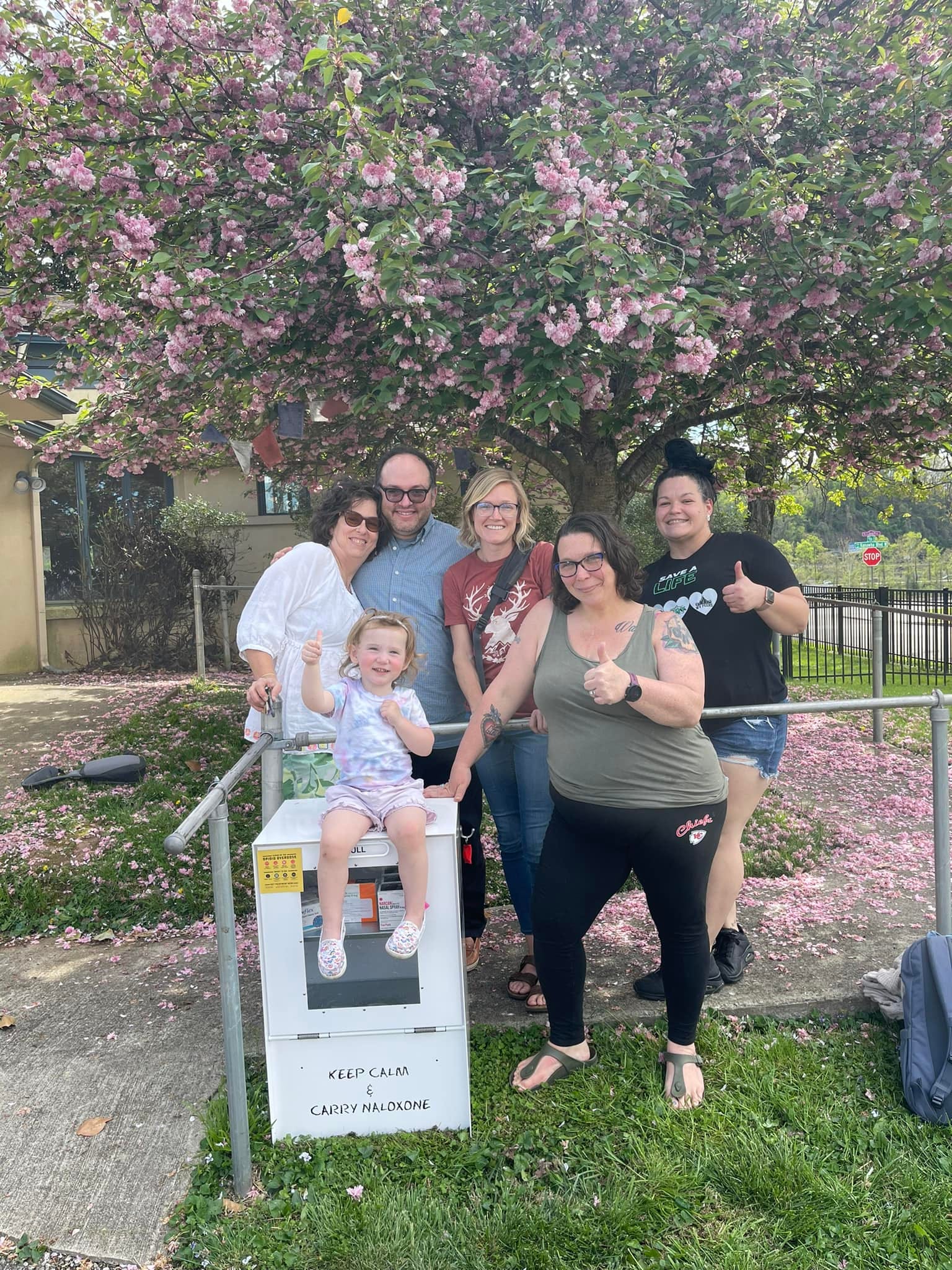
with SOAR “framily”
This is Chapter 32 from a book project called "Rough Waters Ahead: Holding on for Young & Rising Climate Change Activists".I’m sorry.
That’s really all I can say. I’m sorry.
And maybe I can tell you a little bit more about my story. One where I learned the meaning of what Kurt Vonnegut may have meant when he wrote, “Love is where you find it.”
I come from a kind of classic Jewish suburban upbringing. Growing up, every time that I made a clever argument, my mom told me I’d make a great lawyer. The backup of course was to be a doctor.
My mom was a middle school history teacher and she’d come home with stories all the time about how brilliant her students were. She’d tell me about her students’ super smart papers, and later when my mom became a high school guidance counselor, she’d tell me about all the Ivy League schools she was helping her students get into. I remember one time she had a student who told my mom that she wanted to be a clown. And my mom told me how this student, how her parents totally backed her up, and sent her to the finest clown school. And I related more to that student than to all the others.
I felt like a clown more than anything else most all the time (and I still do, mind you.)
And I wondered: would my mom support me if I wanted to be a clown?
As things played out, I tested that proposition in my early twenties...when I started to practice stand-up comedy. I’d go to open mics and try out jokes I made up while lying in bed.
Here’s an example of a joke I played with: “I wonder if a fruit fly ever gets confused when it sees a tomato?” Another joke I liked doing: I’d quietly look down at my left shoulder and then look up, amazed. “I just located my shoulder!”
One time my mom called me up when I was living in my Brooklyn apartment and asked me, “What are you doing?”
I said, “I’m lying in bed, coming up with jokes.” And my mom, she said, “Tell me a joke.” And so I told her my fruit fly joke, and she couldn’t stop laughing. Not because it was funny: but because of how funny/sad it was that her son who had been groomed to be a doctor or a lawyer was lying in bed, staring at the ceiling, coming up with nonsensical insights into the brain of the fruit fly.
My mom has shared that story for years (and years)—the time she called her son up and how he told her he was lying in bed, coming up with fruit fly jokes.
I didn’t start out as an activist. I didn’t fight for much in college. I didn’t understand why my fellow sophomores and juniors got so turned up in meetings about the fate of our cafeteria’s low-income workers, or why stopping Bush Jr. from being re-elected was a bad idea, or whatever it was they were getting riled up about in the student-run environmental meetings.
So my first experience being rejected from my parents wasn’t for showing courage for those with less power—it was because I wanted to make people laugh.
Still…I went to open mic comedy nights, which took its own moxie.
And at the end of each open mic night, all the comics would cheer each other on. All the comics, we’d hang out on the club’s front stoop, running through everyone’s best bits, giving each other high fives.
Sometimes we’d go back to my comic friend Danny Lobell’s apartment where we’d all hang out with his hairless cat and just riff off of each other’s not yet polished bits. No joke was funnier than if you made it with this crew, with folks spread out on Danny’s couch and chairs. The riffing would go late into the night. Danny lived in Times Square, I lived mostly all the way down in Brooklyn. I didn’t mind riding the subway home without anyone else much on it.
While giving open-mics a go, I also dipped my feet into improv. I took classes with an improv teacher, whose name was Something Swift. One of the biggest lessons Swift taught us was that improv wasn’t about being the funniest person in the pack—it was about shining a light on your fellow ensemble mates. If you saw a chance for someone else to pounce on an awkward moment and make a breakthrough, give it to them. In Swift’s class, the better you were at improv, the funnier was everyone else.
Within a year, like my mom’s rogue student, I enrolled in clown school myself.
I already shared a little interlude about this experience. Our daily clown workshops pulsed with instructions to cut into our emotions, and to bring those feelings fully to the stage. It was here I learned to give into sadness and vulnerability—that these could be gifts too, not things to be shamed about. It was here too that I met a young woman with dark curly hair with the saddest eyes in the word, and with whom I fell in love. I followed her home to Vancouver and spent two of the best years of my life making her laugh.
My mom knew a little about what I was up to, and she went along for the ride from stand up to improv to clown school. But there was always a part of her that wished I would treat my hobbies as hobbies and get real with a job-job. Her dream diminished of me becoming a doctor. She now advised that I become a Physician Assistant.
Yet...I still felt held.
I knew in every community I lived in there was a pocket of stand-up open mic artists who would cheer on a new member of the pack. Funny people have a way of needing each other. Maybe it’s the sadness we all hold within us: our jokes acting as armor. It’s as if we all knew that under that armor there’s someone who has a reason for needing that armor.
And so, I guess what I’m getting is, if your family doesn’t support you, there’s nothing I can really say. Other than there are families we start out with and there are families we choose. And there are families who choose us.
In every community, in every pocket of the world, there are people who believe the world can be repaired—that mending can bring meaning. Often this is because there’s a part of us that’s broken ourselves: there’s a certain sadness among activists, not unlike clowns. Our armor often shows up as righteousness or tirelessness. We’re racing forward for something, and from something too. We each have our reasons.
And so these groups, these bands of people who believe in the power of healing, we need each other real badly.
In Vermont, I sat with David (fellow 350 Vermont co-founder) during the days he was watching his mom die in a nearby nursing home. David would visit his mom and then I’d meet him in a cafe later in the day. David described the way his mom’s breaths would become slower and slower. And how he would tell her he loved her and that it was OK for her to let go.
In West Virginia, Katey’s mother died from cancer a few years ago. Her funeral was full of as many chosen activist family members as family-family members. I remember holding onto a napkin that my girlfriend at the time cried in during the services. My then girlfriend, Catherine, met Katey while organizing the March on Blair Mountain and at other organizing events in West Virginia. They became like sisters. They found each other through this work.
These are also the days of births. Sarah, who co-founded SOAR with all of us, gave birth to little baby Austin Jane at the peak of our outdoor health fairs. It was a time of COVID-19, but even with a window between us, we all fell in love. I’ve now seen this baby more than my cousin’s children, even my own brother’s daughter.
We build our movements with love. It’s usually messy. People get hurt. And, somehow, most of us who stay survive the hurt. I try to stay vulnerable, like I learned in clown school. I try to shine the light, like I learned in improv class. I try to hold my people through things. And they try to hold me, checking on me when I fall into a depression puddle, or when I get too righteous. Sometimes they bring my pup, Cicada, a beef bone when she gets a limp.
It’s not perfect. It’s not the loyalty of blood family. Yet a lot, it’s enough.
I pray, and I hope, that if your family doesn’t hold you in this work, that you will find one that does.